



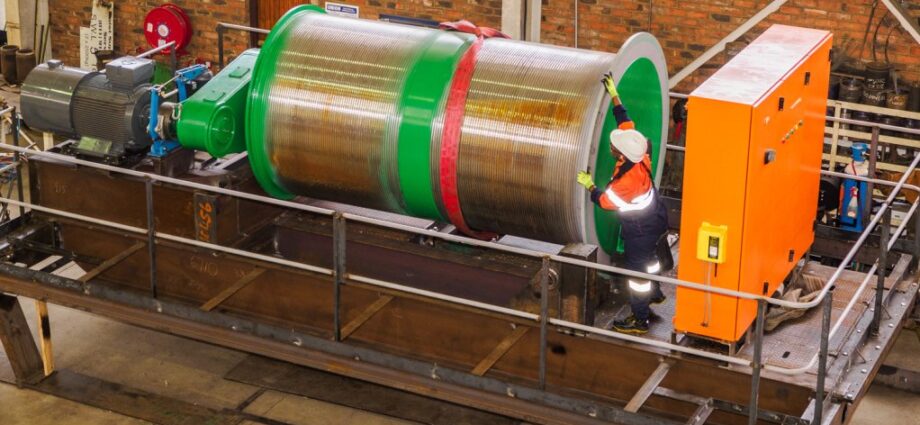
Replacing an overhead crane is a major capital decision, particularly for cargo terminals, logistics hubs, and industrial operations where uptime is critical. Beyond the high financial outlay, there is also operational risk—ranging from performance uncertainty to potential downtime if new equipment does not meet expectations. In this context, crane refurbishment is increasingly emerging as a practical and cost-effective alternative.
Where operational requirements remain unchanged, refurbishment offers clear advantages. It significantly reduces capital expenditure, enhances performance through modern upgrades, and preserves operator familiarity. In busy cargo environments, this last factor is especially valuable, as it allows operations to continue without disruption or the need for retraining staff.
Modern refurbishment programmes go far beyond basic repairs. They incorporate advanced control systems, upgraded drives, improved safety features, and automation technologies that bring older cranes in line with current performance and compliance standards. This means that refurbished equipment can often match—or even exceed—the capabilities of new installations.
Condra, a well-established manufacturer of cranes and hoists, provides comprehensive refurbishment services alongside new crane production. The company has successfully refurbished machines that are several decades old, restoring them to full operational capacity and recommissioning them with warranties comparable to new units.
One of the most overlooked advantages of refurbishment is operational continuity. Using equipment that operators already understand eliminates the learning curve associated with new machinery. In high-throughput cargo operations, this continuity helps maintain productivity and reduces the risk of costly disruptions.
Downtime remains one of the biggest hidden costs in logistics and cargo handling. When new equipment requires imported components or specialised servicing, delays can stretch for weeks. Refurbishment, particularly when supported by local manufacturing capabilities, can significantly reduce turnaround times. In many cases, refurbishment can be completed within a few weeks, minimising interruptions to operations.
Local expertise also plays a crucial role. By manufacturing most components domestically, companies like Condra are able to avoid the delays and high costs associated with importing spare parts. This ensures faster service delivery and better long-term maintenance support.
Technological upgrades further strengthen the case for refurbishment. Enhancements such as variable frequency drives improve motion control and efficiency, while options like remote operation and digital load monitoring add precision and safety. These upgrades are particularly valuable in cargo environments where efficiency, accuracy, and safety are critical.
Refurbishment also offers flexibility. Crane capacity, span, and operational features can be modified to meet evolving business needs without the expense of full replacement. This adaptability makes it an attractive option for operators looking to modernise existing infrastructure while managing costs.
With new crane prices rising significantly over the past decade, refurbishment presents a compelling value proposition. It combines lower costs, faster turnaround times, and modern performance capabilities, making it a strategic choice for cargo and industrial operations aiming to remain competitive.
In an environment where efficiency, reliability, and cost control are essential, crane refurbishment is not just an alternative—it is often the smarter investment.
