



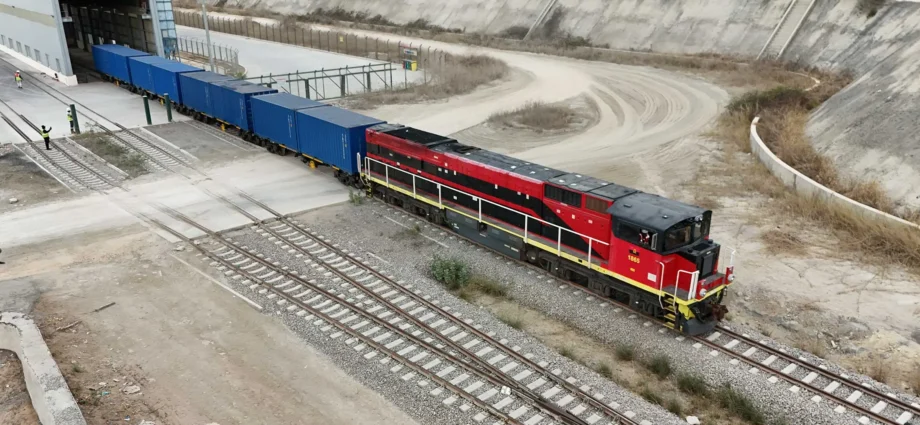
International investment momentum behind the Lobito Corridor continues to accelerate, with total global financial commitments to the strategic African trade and logistics route now exceeding US$6 billion. The corridor is rapidly emerging as a critical backbone for regional cargo movement, mineral exports, and industrial development across Southern and Central Africa.
Stretching from the mineral-rich regions of the Democratic Republic of Congo (DRC) and Zambia to the Port of Lobito in Angola, the corridor is increasingly viewed as a vital alternative export route for Africa’s critical minerals and bulk cargo, strengthening access to global markets while easing pressure on traditional logistics channels.
A major milestone was reached in December 2025 with the financial close of a US$535 million funding package to advance corridor implementation. The package was co-financed by the U.S. Development Finance Corporation, Trafigura, Mota-Engil, Vecturis, and the Development Bank of Southern Africa, providing momentum for large-scale infrastructure upgrades.
The funding supports the rehabilitation and operation of the 1,289-kilometre Benguela Railway, a key rail artery linking the Port of Lobito to inland mining and industrial zones in the DRC. The project follows the issuance of an engineering, procurement and construction (EPC) tender in October 2025, paving the way for full-scale execution.
The United States has emerged as a major backer of the initiative, committing more than US$4 billion to the broader Lobito Corridor programme as part of efforts to strengthen resilient and diversified supply chains for critical minerals.
European participation also expanded significantly during 2025. Nearly €57 million in grants were allocated to transport, mining, and energy projects along the Angolan section of the corridor, while the European Union announced an additional €200 million earmarked for transport, energy, water, and mining infrastructure in Zambia. These commitments form part of the EU’s broader Global Gateway pledge of more than €2 billion to the corridor.
Private sector involvement is reinforcing the project’s commercial foundation. A consortium led by Switzerland-based Menomadin & Mitrelli Group, in partnership with Angola’s Sovereign Wealth Fund, launched a US$1 billion investment vehicle aimed at mobilising private capital for corridor-linked logistics, transport, and industrial infrastructure.
African development finance institutions are also playing a catalytic role. The Africa Finance Corporation (AFC), acting as lead project developer and financier, secured capital commitments from investors across Japan, Canada, Europe, and the Arab world in 2025. Meanwhile, the African Development Bank is mobilising up to US$500 million through international partnerships and targeted financing mechanisms.
With global demand for critical minerals expected to rise sharply over the coming decades, the Lobito Corridor is positioning itself as a strategic logistics platform connecting Africa’s resource base to global energy transition markets. The DRC’s vast untapped mineral potential and Zambia’s ambition to increase copper production to three million tonnes per year underscore the corridor’s importance as a driver of regional cargo flows, rail freight growth, and port throughput.
For global investors, governments, and cargo operators, the Lobito Corridor represents a long-term opportunity to reshape African trade routes, strengthen multimodal logistics networks, and support sustainable industrialisation across the region.
