



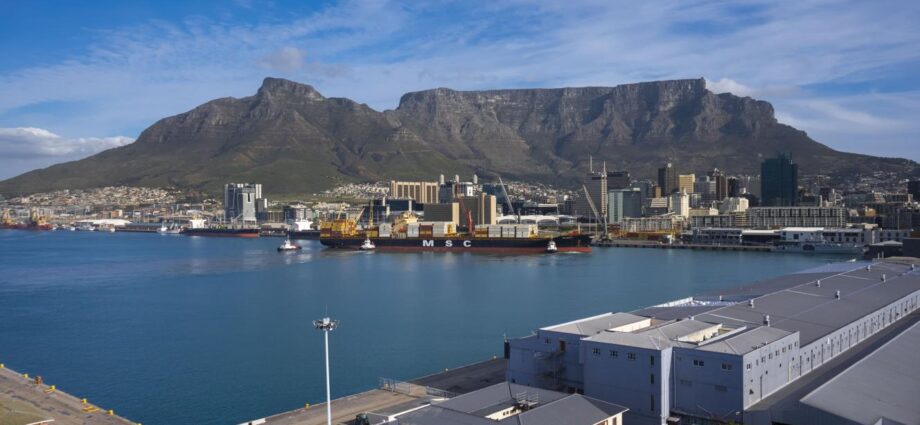
South Africa’s Port of Cape Town is recording significant improvements in operational efficiency, with reduced vessel waiting times and faster turnaround performance helping strengthen one of Africa’s most important trade gateways. The improvements are expected to benefit exporters, importers and logistics providers by reducing shipping delays, improving supply chain reliability and enhancing the competitiveness of regional trade.
According to Transnet National Ports Authority (TNPA), targeted operational interventions have substantially reduced vessel congestion, with ships increasingly able to berth immediately upon arrival rather than waiting at anchorage.
Container vessel turnaround times have improved considerably over the past two years. Average turnaround time at the container terminal declined from 103 hours during the 2023/24 financial year to 74 hours in 2025/26, with further progress recorded during the current financial year, where average turnaround times have fallen to 58 hours.
Waiting times for vessels anchored outside the port have also improved significantly, decreasing from 127 hours in 2023/24 to 79 hours in 2025/26, reflecting improved port efficiency and better coordination of marine operations.
TNPA attributes the improvements to higher terminal handling rates, enhanced operational planning and a reduction in marine-related delays.
One of the major contributors has been the permanent deployment of ten shore tension units, which help minimise disruptions caused by long-wave conditions. Since their introduction, downtime associated with adverse wave conditions has reportedly declined by 92%, enabling more consistent port operations throughout the year.
The improved operational performance has coincided with growing cargo volumes. During the 2025/26 financial year, container throughput increased by 6.5% year-on-year, supported by record deep-sea import and export volumes, highlighting Cape Town’s growing role in regional and international trade.
Industry stakeholders say the improvements are becoming increasingly visible across port operations.
According to Exporters Western Cape, vessels are now approaching the point where they can berth immediately upon arrival, significantly reducing costly delays that have previously affected exporters, particularly those handling time-sensitive agricultural products.
Favourable weather conditions have contributed to the improved performance, while investments in new operational equipment have strengthened the port’s ability to continue working during periods of stronger winds that have historically disrupted cargo handling activities.
The Western Cape Government has also reported measurable improvements through its digital logistics planning platform, which monitors key port performance indicators.
Officials note that vessel turnaround time is an important international benchmark, as it forms part of the World Bank’s Container Port Performance Index (CPPI), widely used to assess the efficiency and competitiveness of ports worldwide.
Despite the positive progress, industry experts emphasise that sustaining these gains will require continued investment beyond infrastructure. Skilled equipment operators, effective responses to weather-related disruptions, improved maintenance programmes and stronger coordination across the logistics value chain will all remain essential to maintaining long-term operational performance.
For Africa’s logistics and maritime sector, the continued improvement at the Port of Cape Town represents an encouraging step toward more efficient supply chains. Faster vessel turnaround times not only reduce shipping costs but also improve export competitiveness, strengthen regional trade connectivity and support economic growth across Southern Africa.
