


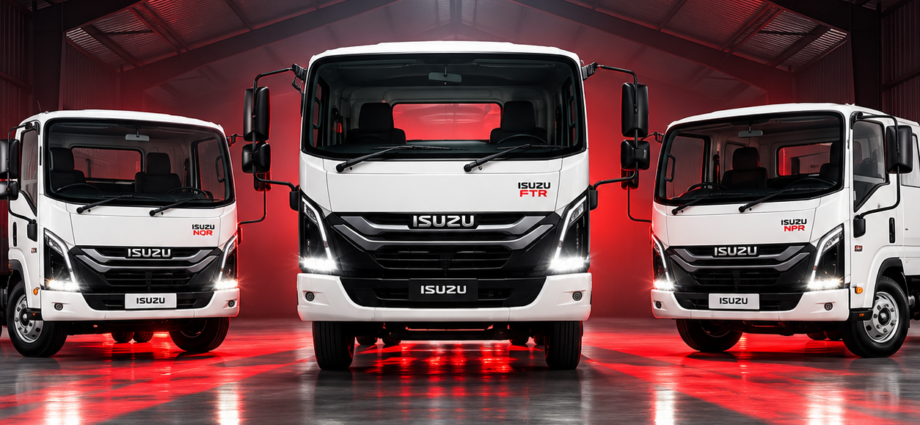
GQEBERHA, South Africa — Isuzu Motors South Africa has unveiled its seventh-generation N-Series light and medium-duty trucks, introducing upgrades in safety, fleet management, driver comfort and chassis design while preparing the platform for alternative energy technologies.
The new range is built on Isuzu’s Modular Architecture and Component System (I-MACS), a global vehicle platform designed to accommodate different powertrains and future commercial vehicle technologies.
While the South African launch focuses primarily on cleaner diesel engines, Isuzu is also testing compressed natural gas (CNG) and battery-electric variants. Bio-compressed natural gas is under evaluation as another potential fuel option.
The launch reflects growing demand for commercial vehicles that combine operational efficiency, lower emissions and improved digital fleet management capabilities.
New Models Target Diverse Commercial Applications
The initial N-Series lineup includes several models designed for different transport and operating requirements.
The NMR 250 AMT is available in short-wheelbase and crew-cab configurations, targeting urban delivery operations where manoeuvrability is important.
The NPS 300 AMT is offered in single- and crew-cab versions, with an automated manual transmission designed to improve driving control and usability, particularly in demanding off-road conditions.
The NQR 550 extends the range into the upper end of the medium-duty segment, offering increased payload capacity and operational efficiency. Isuzu states that this model is Euro 2 compliant, while other models in the range feature Euro 5-compliant engines.
A compressed natural gas version of the NPR 400 is planned for introduction approximately one year after the initial launch. The model is expected to be available with either a manual transmission or an automated manual transmission, providing an alternative fuel option for urban and regional transport operations.
Cleaner Engines and Transmission Improvements
The new N-Series range incorporates additional Euro 5-compliant diesel models and exhaust after-treatment technology intended to reduce emissions.
According to Isuzu, its diesel oxidation catalyst (DOC) system helps reduce harmful exhaust emissions without requiring AdBlue diesel exhaust fluid.
The company has also introduced improvements to its automated manual transmission systems, including revised control logic and driver warnings. These enhancements are intended to support smoother operation, improve driver guidance and help protect vehicle components under demanding operating conditions.
For fleet operators, such developments can contribute to more consistent vehicle operation and improved suitability for different transport applications.
Isuzu Insight Telematics Supports Fleet Management
Each new N-Series truck comes with a two-year subscription to Isuzu Insight, the company’s fleet management platform.
The system provides business intelligence dashboards, vehicle servicing reminders and proactive alerts designed to help operators monitor vehicle performance and manage maintenance requirements.
Access to fleet data can help businesses identify operational inefficiencies, plan servicing and improve vehicle utilisation. The service is opt-in, allowing customers to control whether they use the platform.
As transport operators increasingly adopt digital fleet management tools, connected vehicle systems are becoming an important part of commercial vehicle operations.
