



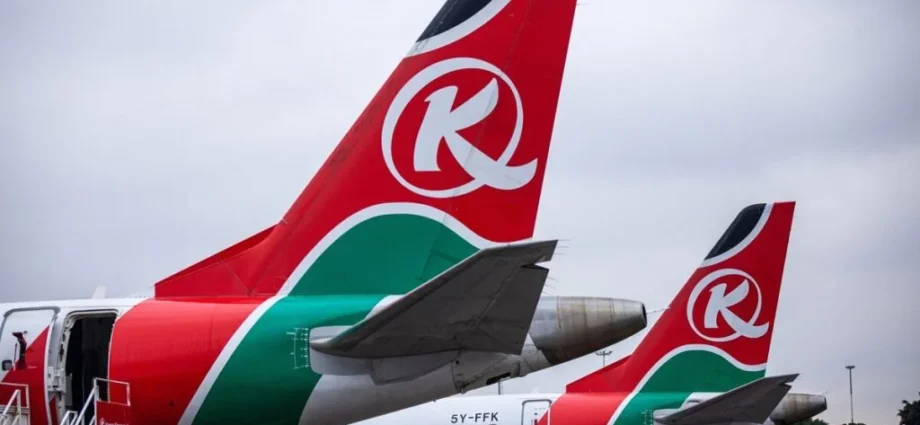
Kenya Airways is accelerating plans to expand its cargo operations, aiming to increase the business unit’s share of group revenues from 10% to 20% in 2026.
Speaking to African Cargo and Bulk Handling, cargo director Fitsum Abadi Gebrehawaria outlined the airline’s immediate and long-term plans, which include the introduction of Boeing 767 freighters, paving the way for a future fleet of Boeing 777Fs.
“Adding widebody freighters is central to our cargo-first strategy,” Abadi said. “We plan to take delivery of our first 767 freighter by the end of the first quarter, with a second expected shortly after. This will serve as a bridge to our longer-term goal of operating three 777Fs by 2030.”
Currently, Kenya Airways operates four narrowbody freighters: two Boeing 737-300s and two 737-800s, the latter having joined the fleet in 2024. The introduction of widebody freighters will allow the airline to better tap into demand from the Asia-Pacific region, with Guangzhou and potentially Hong Kong among the initial target destinations.
Initial 767 operations may include technical stops in the Middle East, supporting perishable cargo exports before returning with e-commerce shipments. While the airline prefers the 777F, limited availability has made the 767 a more practical short-term solution.
Abadi emphasized that expanding cargo is part of a broader strategy to stabilise Kenya Airways’ revenue streams. “Cargo provides resilience against passenger market volatility, which continues to challenge African airlines,” he said.
In addition to fleet growth, Kenya Airways Cargo is investing in digital systems to enhance capacity planning, real-time tracking, and yield optimisation. “We are pursuing a full digital transformation with an industry-standard cargo management system to improve efficiency across our operations,” Abadi added.
The airline is also expanding its network through partnerships. It has signed memorandums of understanding with Qatar Airways and Air Tanzania and maintains interline agreements with carriers including China Southern, Saudia, Turkish Airlines, Ethiopian Airlines, and Bluorbit. “Interline agreements allow us to access offline markets, which supports cargo revenue growth,” Abadi explained.
Further investments are being made in specialised cargo solutions, including pharma, perishables, e-commerce, express, and courier services, building on the airline’s existing strengths in perishable exports.
With fleet expansion, technology upgrades, and strategic partnerships, Kenya Airways is positioning itself to become a leading cargo operator in Africa, balancing its revenue portfolio and meeting growing regional and global demand.
If you want, I can also create an even snappier version tailored for “Zambia Modern Mining”, emphasizing trade, e-commerce, and perishables relevant to African logistics and mining support sectors. That version would read more like a business spotlight rather than an aviation report.
