



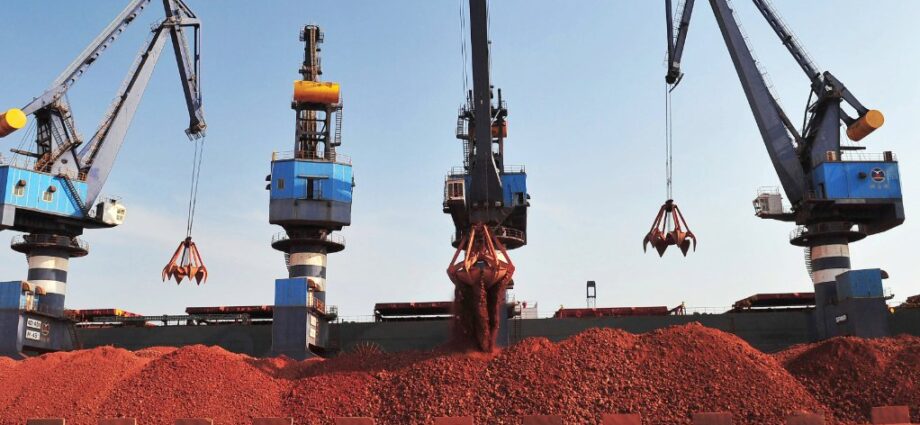
Global bauxite shipments climbed 16% year-on-year during the first 11 weeks of 2026, largely fueled by robust demand from China for cargoes originating in Guinea. Guinean supply dominated the market, accounting for 79% of total shipments, while volumes from other regions slipped by 3% compared to the same period last year. Over the longer term, bauxite has been one of the fastest-growing commodities in the dry bulk sector, expanding at an average annual rate of 10% between 2021 and 2025.
The surge in shipments reflects China’s ongoing need to offset declining domestic bauxite reserves, alongside a 3% year-on-year rise in its aluminium production during the first two months of 2026. China remains the central force in the market, receiving 88% of global bauxite exports and producing 65% of the world’s aluminium. As the key raw material in aluminium production, bauxite is first refined into alumina before being processed into the final metal.
The shipping sector—particularly the Capesize segment—has benefited significantly from this growth. Capesize vessels transport around 79% of global bauxite cargoes, and rising volumes have helped drive a 121% year-on-year increase in the Baltic Exchange’s Capesize index so far this year. Shipments on these vessels have increased by 25%, and when combined with relatively long sailing distances, have boosted tonne-mile demand. Bauxite now represents roughly 20% of total Capesize tonne-mile demand, making it the segment’s second-largest commodity.
Despite the strong performance, the outlook for bauxite trade faces a mix of supportive factors and emerging risks. On the positive side, global aluminium demand continues to rise, while China’s domestic bauxite reserves continue to decline. However, China’s aluminium production has now reached its government-imposed cap of 45 million tonnes per year—a limit introduced in 2017 to control oversupply, energy use, and environmental impact. If strictly enforced, this cap could slow further growth in bauxite demand.
Guinea’s evolving industrial strategy could also influence future trade flows. The country is aiming to expand its domestic alumina refining capacity, which could reduce raw bauxite exports over time. However, in the near term, the impact is expected to remain limited, with only one refinery currently under construction.
More immediate risks stem from geopolitical tensions and shifting market conditions. Disruptions in the Persian Gulf have already affected aluminium exports from the region, potentially prompting buyers to turn to alternative suppliers such as China. At the same time, rising aluminium and energy prices could dampen demand, given the energy-intensive nature of aluminium production.
Another key uncertainty lies within Guinea itself. The government is considering the introduction of bauxite export quotas as a way to support prices. Although no final decision has been made, such a move could significantly disrupt global supply chains and weigh on shipping demand, particularly within the Capesize segment.
Overall, while strong Chinese demand continues to underpin bauxite trade growth, a combination of policy constraints, geopolitical developments, and market pressures could shape a more uncertain path ahead.
