



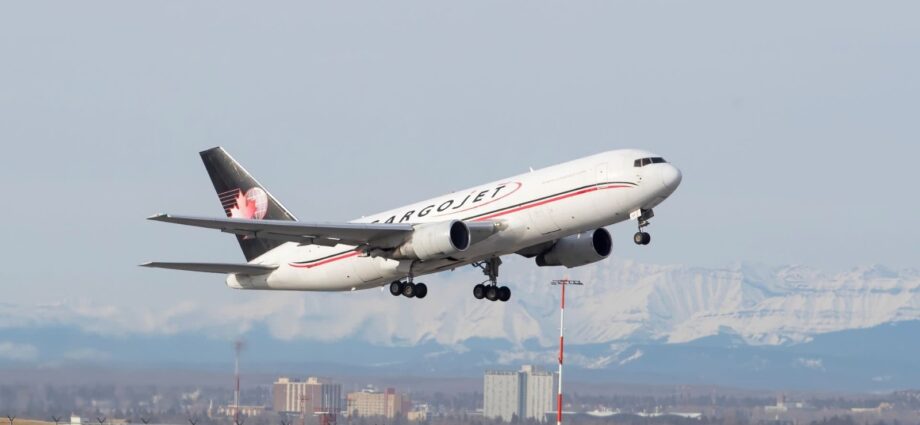
Canadian freighter operator Cargojet reported softer fourth-quarter financial results, reflecting the broader slowdown in transpacific cargo demand and ongoing volatility in global trade flows — trends closely watched by African air cargo stakeholders linked to Asia-bound supply chains.
For the fourth quarter, Cargojet recorded revenues of C$284.7 million, representing a 2.9% year-on-year decline. Earnings before income taxes dropped 57.4% to C$32.9 million, while net earnings fell 62.6% to C$26.6 million. The downturn was largely attributed to weaker long-haul demand between Asia and North America, prompting the airline to redeploy aircraft across alternative markets.
Shift in ACMI and Charter Dynamics
ACMI (Aircraft, Crew, Maintenance, and Insurance) revenues declined by 22.6%, driven by global trade uncertainty and the repositioning of aircraft from long-haul Asia and Europe routes to selected South American sectors. For African operators and logistics firms engaged in ACMI partnerships, this underscores how rapidly aircraft capacity can be reallocated when demand shifts across global corridors.
All-in charter revenues also fell 9.6% year on year due to reduced scheduled charter frequencies between China and Canada. However, the company noted sequential improvement in charter performance, supported by newly secured ad hoc charter opportunities — a sign that flexible, demand-driven cargo operations remain resilient even during market slowdowns.
Domestic Strength Offsets International Weakness
While international operations faced pressure, Cargojet’s domestic Canadian network delivered strong growth, with revenues rising 16.9% year on year. The company attributed this to steady consumer demand despite ongoing trade uncertainties.
For African cargo markets, this trend mirrors a broader global pattern: while intercontinental volumes may fluctuate due to geopolitical and trade disruptions, regional and domestic cargo networks are proving increasingly critical for revenue stability.
Full-Year Performance
For the full year, revenues declined slightly by 0.8% to C$992.7 million, while net earnings decreased 26% to C$80.2 million. The reduction in profitability was mainly driven by lower gross margins, increased finance costs, and higher tax provisions.
Despite the earnings pressure, the company emphasised its continued focus on operational efficiency and cost discipline to manage an environment marked by geopolitical uncertainty and shifting trade patterns.
Fleet Strategy and Asset Management
Cargojet continued to actively manage and optimise its fleet throughout 2025. During the second quarter, it took delivery of two converted Boeing 767-300 freighters and inducted them into service before selling them to a financial institution in the third quarter and leasing them back — a move aimed at strengthening liquidity while retaining operational control.
A third 767-300 remains under conversion, with delivery expected in the first quarter of 2026. Additionally, the company inducted a factory-built 767-300 freighter into its fleet during the third quarter.
To support operational continuity, the lease of one 767-200 aircraft has been extended through March 2026. The airline also finalised the sale of two 767-300 aircraft in the second half of the year and signed a letter of intent to acquire another converted 767-300, scheduled for delivery in early 2026. In a further fleet adjustment, one Boeing 757-200 aircraft was leased to a third party during the third quarter.
Implications for African Cargo Markets
For African cargo operators and logistics providers, Cargojet’s performance reflects broader structural trends affecting global air freight. Demand fluctuations on Asia-linked routes — critical for African imports of electronics, machinery, and consumer goods — continue to influence aircraft deployment strategies worldwide.
The company’s agile redeployment of capacity, emphasis on domestic network strength, and use of sale-and-leaseback transactions highlight financial and operational strategies that could offer lessons for African carriers navigating similarly volatile trade conditions.
As global supply chains recalibrate and geopolitical dynamics evolve, flexibility in fleet management, diversified route networks, and disciplined cost structures remain central to sustaining profitability in the competitive air cargo landscape.
