



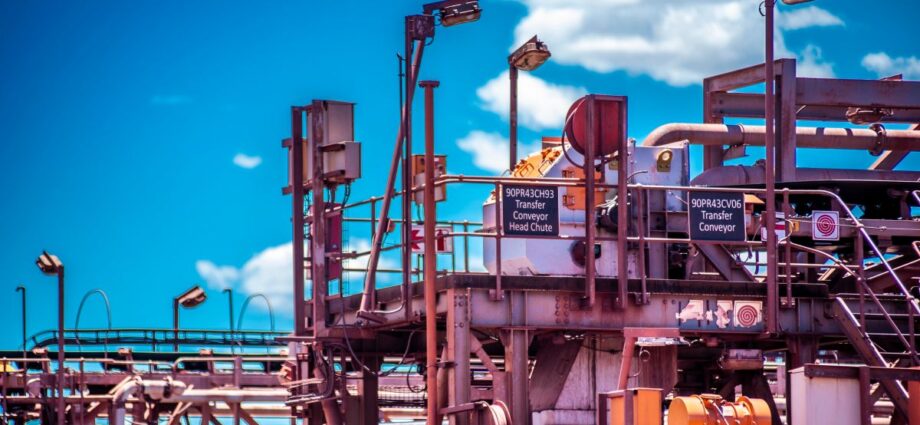
As mining operations continue to pursue higher production rates, improved sustainability, and lower operating costs, transfer point design has become a critical factor in overall plant performance. According to Mark Baller, Managing Director of Weba Chute Systems, modern chute engineering is playing a far greater role in mining productivity than ever before.
A decade ago, discussions around chute performance largely focused on reducing blockages and minimising wear. Today, however, mining companies expect transfer systems to contribute directly to operational efficiency, energy savings, environmental compliance, equipment longevity, and workplace safety. As conveyor systems handle greater volumes at higher speeds, transfer points have become essential components in achieving both productivity and sustainability goals.
One of the most significant developments in recent years has been the increase in conveyor belt speeds and widths. As mining companies strive to maximise throughput, conveyors are required to move larger volumes of material at faster rates. While this improves production capacity, it also places greater stress on chute liners and receiving belts.
According to Baller, maintaining controlled material flow has become more important than ever. Poorly managed transfer points can lead to surging, uneven loading, excessive wear, and costly downtime. Modern chute designs are therefore engineered to ensure smooth, controlled material movement that protects equipment while maintaining operational efficiency.
Another major challenge facing the mining industry is increasing ore variability. As mines expand deeper and process more complex deposits, operators must manage a wider range of material characteristics, including changes in particle size, abrasiveness, moisture content, and blending requirements.
To address this challenge, advanced modelling and simulation technologies are now used during the chute design process. These tools allow engineers to predict material flow behaviour under varying operating conditions and develop customised solutions that maintain consistent performance regardless of changing ore properties.
Environmental, social, and governance (ESG) requirements have also become key drivers of innovation in chute design. Dust and noise emissions, once considered secondary concerns, are now closely monitored as mining companies work to meet stricter environmental standards and improve workplace conditions.
Modern transfer point designs incorporate enclosed systems, advanced liners, and engineered flow control technologies that significantly reduce airborne dust and noise generation. These improvements not only help operations comply with environmental regulations but also create safer and healthier working environments for employees.
Maintenance strategies across the mining industry have undergone a similar transformation. Rather than relying on reactive maintenance, many operations are adopting predictive and condition-based maintenance programmes supported by digital monitoring technologies.
In response, chute systems are being designed with easier inspection access, modular liner replacement capabilities, and smart monitoring features that provide valuable performance data. These innovations allow maintenance teams to identify potential issues early, schedule repairs efficiently, and minimise unplanned shutdowns.
At the same time, mining companies are placing greater emphasis on total cost of ownership rather than focusing solely on upfront capital costs. Today’s operators evaluate equipment based on its impact on uptime, energy consumption, wear life, maintenance requirements, and overall operational performance.
Baller notes that demonstrating measurable long-term value has become a key differentiator in the market. Through simulation-led engineering and application-specific designs, Weba Chute Systems helps customers achieve lower operating costs, increased equipment reliability, and improved plant performance throughout the life of the installation.
Retrofitting existing transfer points continues to represent a significant portion of the company’s work. Many mining operations seek assistance in addressing persistent challenges such as spillage, excessive dust generation, belt damage, and premature wear.
Weba Chute Systems approaches retrofit projects by conducting a comprehensive assessment of the entire materials handling system, including ore characteristics, belt dynamics, loading geometry, and ventilation conditions. Using this information, the company develops customised chute solutions that control material acceleration and impact, align material flow with belt speed, and minimise turbulence.
The result is reduced wear, lower dust emissions, cleaner operating environments, and improved equipment availability.
According to Baller, there is no universal solution when it comes to transfer point design. Every operation presents unique challenges that require tailored engineering solutions. By combining extensive application knowledge, advanced simulation technology, local manufacturing capabilities, and ongoing lifecycle support, Weba Chute Systems continues to deliver transfer point solutions that enhance mining efficiency while supporting long-term sustainability goals.
As mining operations become increasingly focused on productivity, safety, and environmental performance, modern chute design is proving to be a critical contributor to operational success.
