



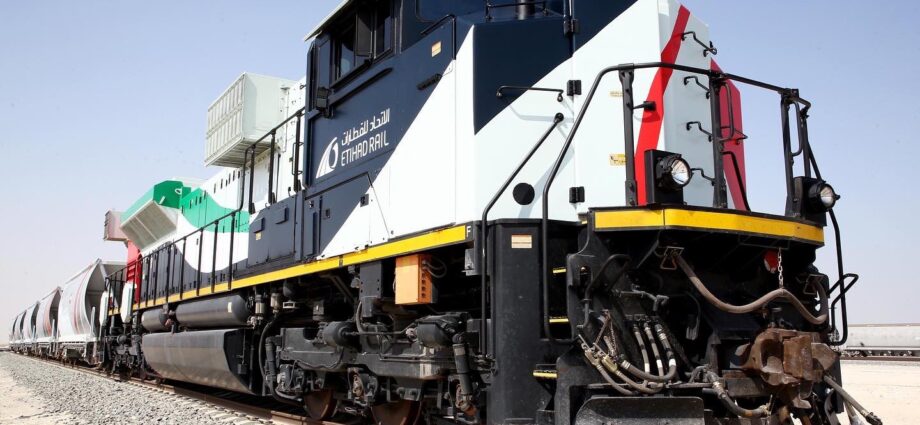
The United Arab Emirates is increasingly relying on rail freight to maintain the flow of goods as regional disruptions continue to impact maritime operations. Ongoing tensions linked to the Middle East conflict have placed pressure on key ports, including Jebel Ali Port—the largest ocean cargo hub in the Persian Gulf.
In response, Etihad Rail has significantly scaled up its freight operations to ensure continuity in the country’s logistics network. According to reports from Al Etihad, between March 9 and 10 alone, Etihad Rail Freight operated more than 100 train trips over a nine-day period, transporting approximately 459,000 tonnes of cargo and over 7,900 containers.
This surge in rail activity has helped offset disruptions at seaports by maintaining connectivity between major industrial zones, logistics hubs, and inland facilities. The railway has effectively become a critical backbone for domestic cargo movement during a period of heightened uncertainty.
To further strengthen resilience, additional rail corridors have been activated, and intermodal capacity has been redirected toward alternative gateways such as Fujairah Port on the Gulf of Oman. This strategic shift allows cargo to bypass congested or disrupted routes in the Gulf, ensuring smoother supply chain operations.
Capacity has also been expanded inland, with five new services introduced to Al Ghail Dry Port, located in the emirate north of Dubai. These enhancements are helping to distribute cargo more efficiently across the country while reducing reliance on any single port.
According to Etihad Rail Freight CEO Omar Alsebeyi, the national rail network was designed with resilience in mind. He emphasised that rail continues to provide a reliable and efficient transport solution, enabling businesses to maintain operations despite external disruptions.
With teams working closely alongside national authorities, Etihad Rail is playing a central role in safeguarding the UAE’s supply chains—demonstrating how integrated rail infrastructure can provide stability and flexibility in times of crisis.
