



Africa’s air cargo sector is gaining momentum, supported by rising demand for perishables, shifting global supply chains, and ongoing efforts to reduce trade barriers. Industry stakeholders remain optimistic, even as structural and geopolitical challenges persist.
According to the International Air Transport Association (IATA), African airlines recorded a 6% year-on-year increase in air cargo demand in 2025, alongside a 7.8% rise in capacity. This growth has been driven by expanded airline networks, stronger integration into global supply chains, and sustained demand for time-sensitive exports such as fresh produce.
The positive trend has continued into 2026. In January, African carriers posted an 18.2% surge in demand—the highest growth rate globally—while February saw a further 21% increase. Capacity also rose steadily during this period, reflecting the industry’s efforts to keep pace with demand.
Trade lane performance reinforces this growth. The Africa–Asia corridor, though still relatively small in global market share, has shown remarkable expansion, with demand rising sharply for seven consecutive months. Imports into Africa include semiconductors, machinery, and renewable energy components, while exports largely consist of perishables like fruits, vegetables, flowers, and seafood, alongside raw materials and precious metals.
Despite this strong start, IATA forecasts more moderate growth of around 2% for Africa in 2026, broadly in line with global expectations. While global air cargo demand grew by 3.4% in 2025, it is expected to slow to 2.6% this year.
Key Drivers of Growth
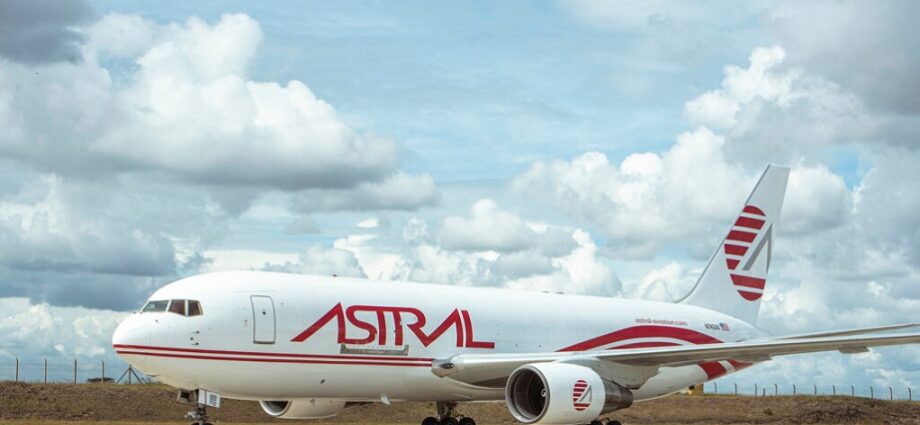
Industry players such as Astral Aviation remain confident about the sector’s outlook. The airline expects steady to moderately positive growth, with strong performance anticipated in e-commerce, pharmaceuticals, perishables, and energy-related cargo.
Airfreight continues to play a critical role in time-sensitive supply chains, particularly as intra-African trade expands. The rollout of the African Continental Free Trade Area (AfCFTA) is expected to further boost regional trade flows, improve connectivity, and unlock new market opportunities.
Ground handling companies are also benefiting from increased activity. Swissport handled around 400,000 tons of cargo across Africa in 2025, highlighting the continent’s growing importance within global logistics networks. Like airlines, Swissport identifies perishables, pharmaceuticals, and e-commerce as key growth segments.
E-commerce, while still developing in Africa, is beginning to reshape cargo flows. Major logistics hubs such as Johannesburg and Lagos are emerging as important consumption and redistribution centres, with airlines adjusting capacity to capture this evolving demand.
Supply Chain Shifts Create Opportunities
Global supply chains are undergoing significant transformation, creating new opportunities for Africa. Diversification strategies—such as the “China Plus One” approach—are shifting manufacturing and trade flows toward emerging markets.
These changes are opening new trade routes and strengthening Africa’s position as a strategic logistics hub linking Asia, the Middle East, and other regions. Increasing diversification across trade lanes is also improving resilience and reducing dependence on traditional routes.
For example, exporters in East and Southern Africa are increasingly targeting Middle Eastern markets, particularly Gulf countries, with fresh produce and meat. This shift is helping broaden export markets and enhance long-term stability.
Countries like Algeria are also emerging as important logistics gateways, supported by growing agricultural exports and expanding pharmaceutical production, which is driving demand for specialised, temperature-controlled cargo handling.
Fleet Expansion and Network Growth
To support rising demand, airlines are investing in fleet modernisation and expansion. Kenya Airways and Astral Aviation are both upgrading their freighter fleets to include more efficient, long-range aircraft capable of handling larger payloads.
These investments are particularly important given the continent’s historical reliance on dedicated freighters due to limited passenger belly capacity. Expanded fleets are enabling airlines to strengthen connections between Africa, Asia, the Middle East, and potentially transatlantic markets.
Ongoing Challenges
Despite strong growth prospects, several challenges continue to constrain the sector. Geopolitical tensions, including conflicts affecting key airspace corridors, have increased operational costs—particularly fuel expenses.
Financial constraints also remain a major issue. IATA estimates that $1.2 billion in airline funds were blocked from repatriation as of late 2025, with the majority tied up in Africa and the Middle East. This limits airlines’ access to capital and increases financial pressure.
Other structural barriers include high operating costs, infrastructure gaps, fragmented regulations, and slow implementation of initiatives such as the Single African Air Transport Market (SAATM). While many countries have signed on, uneven adoption continues to limit connectivity.
A Promising but Complex Outlook
While Africa’s air cargo market faces undeniable challenges, the overall trajectory remains positive. Strong demand for high-value and time-sensitive goods, combined with improving trade frameworks and shifting global supply chains, positions the continent as one of the most promising growth regions in the industry.
Continued collaboration between airlines, logistics providers, and governments—along with faster regulatory reforms—will be essential to unlocking the sector’s full potential in the years ahead.
