



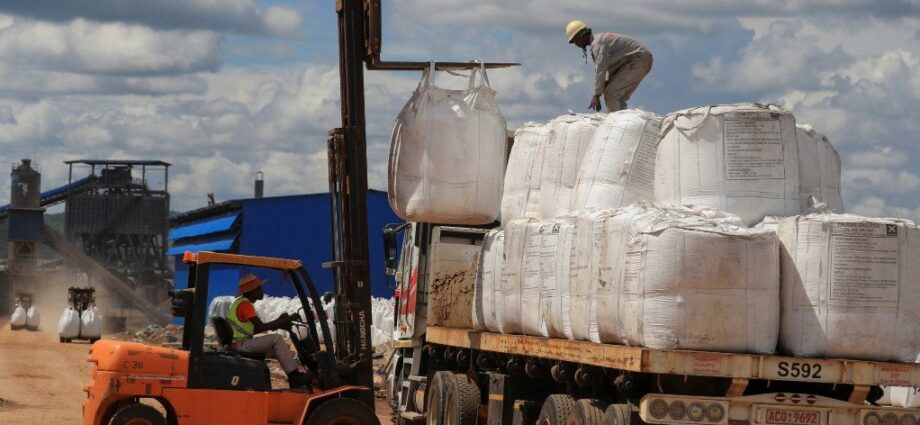
Zimbabwe is set to introduce lithium export quotas and enforce local processing requirements, a move expected to significantly reshape bulk commodity flows and regional logistics dynamics.
The new policy framework, announced by the country’s mines ministry, will require producers to meet strict conditions before lithium concentrate exports can resume. These include compliance with financial reporting standards, labour and environmental regulations, and adherence to newly defined export quotas.
For the cargo and bulk handling sector, the implications are immediate. Zimbabwe, Africa’s leading lithium producer, has been a major exporter of lithium-bearing spodumene concentrate, with material typically transported in bulk via road and rail corridors to regional ports for shipment—primarily to China.
The suspension of exports earlier this year has already disrupted established logistics chains, affecting freight volumes, port throughput, and cross-border transport operations. The introduction of quotas is expected to further regulate shipment volumes, requiring logistics operators to adjust capacity planning and scheduling.
A key component of the policy is the government’s push for in-country value addition. Mining companies must now commit to developing lithium sulphate processing plants by January 2027. While this transition is expected to reduce the long-term export of raw bulk concentrates, it will simultaneously create new logistics demands linked to construction, equipment transport, and the movement of processed materials.
In the short term, a 10% export tax on lithium concentrates remains in place, ahead of a full export ban on unprocessed materials set for 2027. This phased approach is likely to create fluctuating cargo volumes as producers adjust output and export strategies within the regulatory framework.
Chinese-backed mining operations dominate Zimbabwe’s lithium sector, underscoring the country’s strategic role in global battery mineral supply chains. In 2025 alone, Zimbabwe exported over one million metric tons of lithium concentrate, accounting for a notable share of China’s imports.
Recent investments in local processing capacity, including a major lithium sulphate plant commissioned by Zhejiang Huayou Cobalt, signal the beginning of a structural shift. Additional processing projects announced by other operators are expected to further transform the nature of cargo flows—from high-volume raw bulk shipments to more specialized, potentially higher-value exports.
For bulk handlers, freight operators, and port authorities, Zimbabwe’s evolving lithium policy highlights the growing intersection between mining regulation and logistics strategy. As the country moves up the value chain, stakeholders across the cargo sector will need to adapt to changing volumes, cargo types, and infrastructure requirements.
