



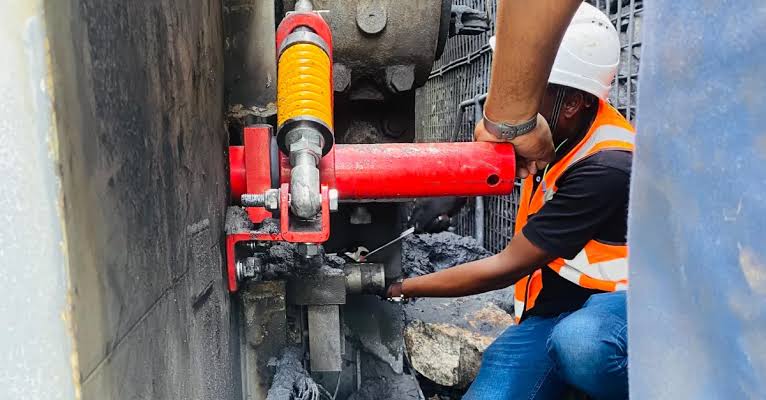
As mining, ports, cement plants and bulk handling facilities across Africa continue to expand, conveyor reliability has become increasingly critical to maintaining productivity and reducing operating costs. Comprehensive conveyor assessments are proving essential in identifying performance issues early, optimising equipment efficiency and extending the service life of conveyor systems.
Rather than focusing on individual components, a complete conveyor assessment evaluates the entire system from the tail pulley through to the drive end. This holistic approach enables operators to detect hidden problems such as belt misalignment, carryback, excessive belt wear, ineffective cleaning systems, transfer point inefficiencies and structural weaknesses before they escalate into costly failures.
According to conveyor specialists, problems that develop at one section of the conveyor can significantly impact performance further along the system. A full assessment therefore provides valuable insight into how every component interacts, allowing maintenance teams to implement targeted improvements that enhance overall system reliability.
Optimising Conveyor Cleaning Performance
One of the key areas evaluated during a comprehensive assessment is belt cleaning efficiency. Correctly specified and installed belt cleaners play a crucial role in reducing carryback, preventing material spillage and minimising belt damage.
Assessments consider factors such as cleaner positioning, blade angle, tension settings and material characteristics to ensure each conveyor receives a solution tailored to its specific operating conditions. Proper installation not only improves cleaning performance but also extends the lifespan of conveyor belts, cleaner blades and associated components, helping operators reduce maintenance costs and maximise return on investment.
Expertise Matters
Even the most advanced conveyor equipment can fail to deliver optimal performance if installation and maintenance are not carried out correctly. Conveyor performance varies depending on factors such as material type, belt speed, operating environment and production demands.
Experienced technical teams are therefore essential for interpreting assessment findings and implementing solutions that perform reliably under site-specific conditions. Their expertise helps operators protect valuable conveyor assets while improving long-term operational efficiency.
Preventative Maintenance Reduces Downtime
Comprehensive assessments should be supported by regular preventative maintenance programmes. Routine inspections allow maintenance personnel to monitor belt alignment, inspect tensioning systems, replace worn belt cleaner blades before failure and detect early signs of wear across the conveyor system.
Regular maintenance also helps identify material build-up and spillage that could negatively affect production if left unchecked.
By addressing minor issues before they become major failures, operators can reduce emergency repairs, minimise unplanned shutdowns and improve maintenance planning. This proactive approach enables more accurate budgeting while lowering overall lifecycle costs.
Supporting Africa’s Growing Bulk Handling Industry
Across Africa’s mining, quarrying, cement, ports and industrial sectors, conveyor systems represent major long-term investments that are central to efficient bulk material handling. As demand for higher productivity and lower operating costs continues to grow, comprehensive conveyor assessments are becoming an essential part of asset management strategies.
When combined with expert installation and disciplined preventative maintenance, these assessments enable operators to improve equipment reliability, maximise production uptime and protect one of the most valuable assets within the bulk materials handling chain.
