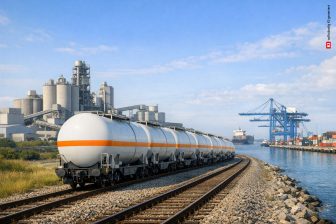
DB Cargo has identified carbon capture and storage (CCS) logistics as a potential new growth market, with a feasibility study indicating that a new CO₂ rail transport chain through Germany’s North Sea port of Wilhelmshaven could support 11 trains per day in each direction by 2030.

The study, conducted by DB Cargo, DB InfraGO, HES International and Harbour Energy, examined the feasibility of transporting captured and liquefied CO₂ from 11 industrial sites by rail to HES International’s planned CO₂nnectNow terminal in Wilhelmshaven. From there, the CO₂ would be transferred to specialised vessels for transport to offshore storage facilities in the North Sea.
According to the study, the proposed flows are technically and operationally feasible, with much of the required rail infrastructure already in place. Volumes could increase to 17 trains per day in each direction by 2033, creating a significant new specialist freight market.
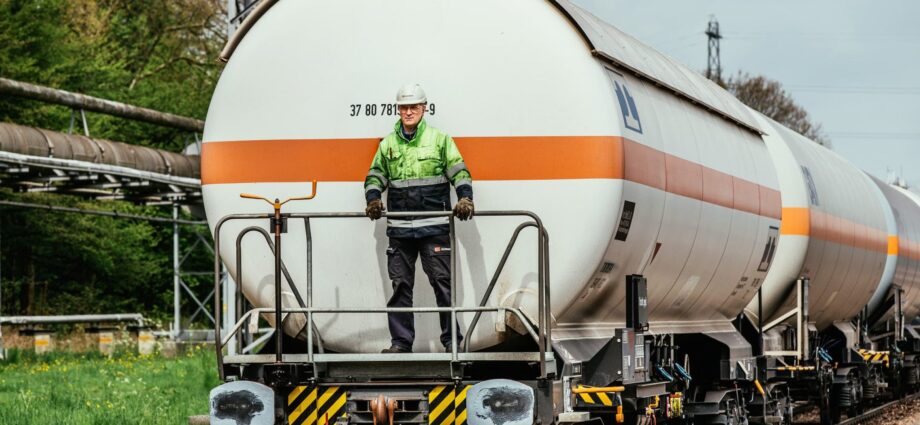
The logistics chain would involve liquefying captured CO₂ at industrial sites before loading it into specially designed tank wagons capable of transporting the material at around -30°C and 15 bar. DB Cargo is also considering dual-mode locomotives to connect non-electrified industrial sidings with the main rail network.
Wilhelmshaven would serve as a central hub, where the CO₂ could be temporarily stored before being transferred to specialised vessels for offshore storage. The concept is particularly relevant to hard-to-abate industries such as cement, lime and waste-to-energy, where carbon capture can help reduce process-related emissions.
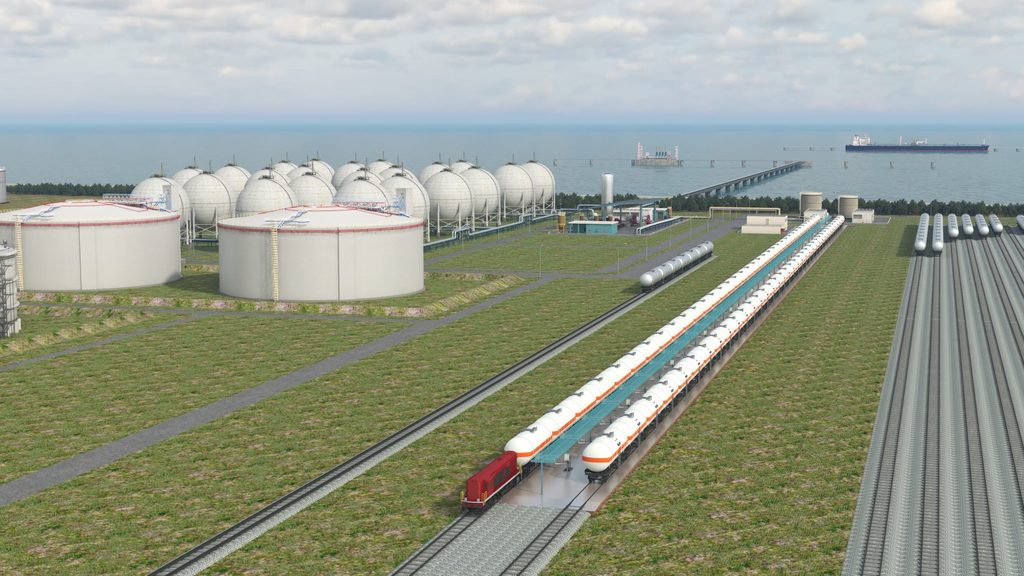
DB Cargo estimates that it could develop capacity to transport around four million tonnes of CO₂ annually within three years of investment decisions on Germany’s first CCS projects. The company is also assessing the equipment and infrastructure required to support the emerging market, including specialist tank wagons, rail sidings and transhipment facilities.
The development highlights the growing role of rail freight in emerging carbon-management supply chains, particularly for industrial facilities located away from future CO₂ pipeline networks.